Growing a High-Quality Afterschool Program, One Core Area at a Time: Partnerships
High-quality afterschool programs don’t happen by chance. They are built intentionally through strong relationships, thoughtful practices, and a commitment to continuous quality improvement.
In the previous blogs of our series exploring the Illinois Statewide Afterschool Quality Standards, we focused on Climate and Learning. Climate creates spaces where young people feel safe, welcomed, respected, and connected. Learning builds on that foundation by creating meaningful experiences where young people can explore their interests, develop new skills, and take an active role in their own growth.
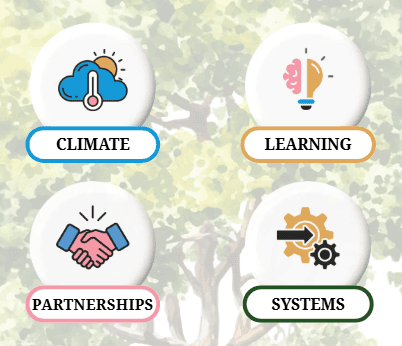
The Standards are organized into four Core Areas: Climate, Learning, Partnerships, and Systems. Together, these Core Areas provide a practical roadmap for strengthening programs and supporting positive outcomes for youth, families, and communities.
In this blog, we’re exploring Partnerships and how meaningful connections with families, schools, organizations, and communities can strengthen programs and expand opportunities for young people.
From Programs to Communities: Building Partnerships That Strengthen Quality
Climate helps young people feel like they belong.
Learning helps them discover what they can become.
Partnerships connect them to the people, opportunities, and resources that help them get there.
Afterschool programs are part of something bigger.
Young people move between home, school, afterschool programs, and their communities every day. Each of these spaces contributes to their learning, development, and well-being. When the people and organizations within those spaces work together, young people benefit from a stronger and more connected network of support.
But What Makes a Partnership Meaningful?
It’s not simply whether a program has community partners.
It’s how those partnerships work together to support young people.
- Are families invited to contribute their knowledge, perspectives, and ideas?
- Do programs communicate and collaborate with schools?
- Are community partnerships connected to the needs and interests of young people?
- Do partners have meaningful opportunities to contribute to program goals?
- Are partnerships mutually beneficial and built to grow over time?
That’s the power of Partnerships: bringing people, organizations, and resources together around a shared commitment to young people.
What Partnerships Look Like in Practice
In high-quality afterschool programs, partnerships can take many forms.
A program might work with school-day staff to better understand what young people are learning and where additional support could help. Families might share their skills, traditions, experiences, or ideas to shape programming. A local organization might provide mentors or introduce young people to new careers. Libraries, colleges, businesses, cultural organizations, or other community partners might provide resources and experiences that a program couldn’t offer on its own.
Partnerships can also help programs better understand and respond to the communities they serve.
What matters is that these relationships are intentional, reciprocal, and connected to the needs, interests, strengths, and goals of young people and families.
Meaningful partnerships are built through everyday actions:
- Creating multiple opportunities for families to communicate, provide feedback, and participate in program decisions
- Learning about the strengths, interests, cultures, and needs of families and communities
- Building consistent communication between afterschool and school-day staff
- Identifying community organizations and resources that align with young people’s interests and program goals
- Inviting partners to contribute their knowledge, skills, and perspectives
- Creating shared expectations and goals with partners
- Connecting young people and families with resources and opportunities in their communities
- Regularly reflecting on whether partnerships continue to meet the needs of young people, families, programs, and partners
- Building relationships that are reciprocal, so that programs and partners both contribute and benefit
When these practices become part of everyday programming, partnerships move beyond individual events or occasional communication and become an intentional part of how programs support young people.
Questions for Reflection
- How are families invited to share their ideas, perspectives, and knowledge with the program?
- How does your program communicate and collaborate with schools?
- What community partnerships currently expand opportunities for young people?
- How do your partnerships reflect the strengths, cultures, interests, and needs of the community?
- Are partners involved in meaningful ways beyond providing a one-time activity or resource?
- How does your program know whether a partnership is working well?
- What relationships could your program strengthen to better support young people and families?
Small Shifts Can Strengthen Partnerships
Strengthening Partnerships doesn’t always require finding new organizations, launching a major initiative, or creating a formal partnership agreement.
Often, it starts by looking differently at the relationships your program already has.
Instead of only sending information to families, ask them what they think. Instead of contacting a school only when a concern arises, create a regular opportunity to connect. Instead of asking a community organization what it can provide, start by talking about what each partner hopes to accomplish. And instead of assuming a partnership is working, take time to ask partners, families, and young people what could make it stronger.
These small, intentional shifts can turn existing connections into deeper, more reciprocal relationships.
Climate creates conditions for young people to belong. Learning gives them opportunities to explore, grow, and discover what they are capable of. Partnerships expand the network of people, resources, and opportunities supporting that growth.
Together, these Core Areas remind us that high-quality afterschool programs don’t exist in isolation. They are connected to families, schools, organizations, and communities that each have something valuable to contribute.
In our next blog, we’ll explore Systems and how intentional structures and practices can help programs sustain quality, support staff, and continuously improve over time.
Want to learn more?
Explore the Illinois Statewide Afterschool Quality Standards to discover all four Core Areas—Climate, Learning, Partnerships, and Systems—and see how they work together to support high-quality afterschool programs through continuous quality improvement.